




Parking Control Systems
How a Parking Control System Works
A parking control system is an integrated set of hardware and software that manages vehicle access, payment processing, and revenue collection for parking lots and garages. Systems range from simple smartphone apps to full-featured gated configurations with barrier gates, ticket machines, pay stations, LPR cameras, and cloud management software.
Here is how a typical gated parking control system works:
- Vehicle arrives - The driver approaches the entry lane and is detected by an in-ground loop detector or sensor.
- Credential check or ticket issue - The driver either scans a credential (RFID card, mobile app, license plate) or takes a ticket from the parking ticket machine.
- Gate opens - The barrier gate raises to allow entry.
- Vehicle parks - The driver parks in the facility. Occupancy data is tracked in real time by the management software.
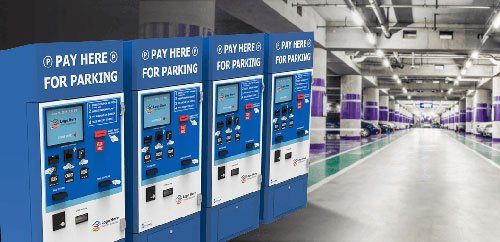
- Payment - Before returning to their vehicle, the driver pays at a pay station or payment machine using tap, chip, mobile wallet, or cash.
- Exit verification - At the exit lane, the driver inserts their validated ticket or the system reads their plate or credential to confirm payment.
- Gate opens and vehicle departs - The exit barrier gate raises, the vehicle leaves, and the transaction is recorded in CloudEASE parking management software.
In gateless configurations, LPR cameras or mobile apps handle access and payment without physical barriers - reducing hardware costs while still tracking every vehicle electronically.
Types of Parking Control Systems
Parking control systems are available in several configurations. The right choice depends on your facility size, traffic volume, revenue goals, and budget.
Full-Featured Gated Systems (PARCS)
PARCS - Parking Access and Revenue Control Systems - are the most comprehensive parking control configuration. They use barrier gates at every entry and exit lane combined with ticket dispensers, pay stations, exit verifiers, LPR cameras, and cloud management software. Full-featured gated systems deliver close to 100% revenue capture because every vehicle must present a validated ticket or credential to exit.
A typical PARCS installation includes entry ticket machines, one or more pay-on-foot stations inside the facility, exit verifiers at each exit lane, barrier gates, and a central management server or cloud platform. The system tracks every vehicle from entry to exit, calculates time-based or event-based fees, processes payments, and opens the gate only after payment is confirmed.
PARCS is the standard for high-volume commercial garages, hospitals, airports, and university campuses - any facility where maximizing revenue capture and controlling access are priorities. Learn more about parking management systems.
Flat-Rate Gated Systems
Flat-rate gated systems use barrier gates with a simple fixed-fee model - every vehicle pays the same amount to enter or exit. Payment is typically collected at entry, allowing the exit gate to open automatically when the driver inserts their receipt or the system reads their plate.
Flat-rate systems are ideal for event venues, fairgrounds, stadiums, and facilities with uniform pricing. They require less equipment than full PARCS because there is no need for complex rate calculations, time-based billing, or pay-on-foot stations. Installation is faster and operating costs are lower, making them a practical choice for facilities that do not need tiered pricing.
Access Control-Only Systems
Access control systems manage who can enter and exit a facility using credentials - RFID cards, key fobs, mobile apps, or license plate recognition - without collecting payment at the gate. The system maintains an access list of authorized users and grants or denies entry based on credential validation.
Access control-only systems are used in employee parking lots, residential communities, gated office parks, and tenant-only garages where the goal is security and access management rather than revenue collection. They can be combined with revenue control for mixed-use facilities - for example, tenants enter free with an RFID card while visitors pay at a pay station. Learn more about parking access control systems.
LPR-Based Ticketless Systems
License Plate Recognition (LPR) systems use AI-powered cameras to read vehicle plates at entry and exit. The plate number replaces the physical ticket - drivers enter without stopping and pay online, at a pay station, or through a mobile app linked to their plate.
LPR eliminates ticket jams, reduces mechanical maintenance, and speeds lane throughput. It can operate with or without barrier gates. In gated configurations, LPR provides ticketless convenience while the gate maintains physical enforcement. In gateless configurations, LPR handles both identification and enforcement through plate-based billing and violation tracking. LPR is increasingly popular for mixed-use facilities, municipal garages, and operators looking to modernize without a full equipment replacement.
Metered Parking Systems
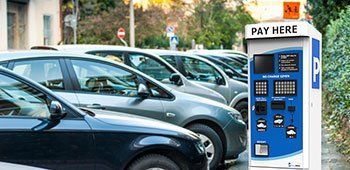
Metered systems use individual or multi-space meters to collect payment for on-street or surface lot parking. Modern multi-space meters serve an entire row or zone from a single unit, replacing the old single-space coin meters that lined every curb. They accept contactless tap payments, credit cards, coins, and mobile payments.
Metered systems are common in municipal and downtown environments where gated entry and exit is not practical. They are also used in surface lots at retail centers, medical offices, and transit stations. Operators can manage rates, time limits, and enforcement remotely through cloud-connected meter networks.
Smartphone App-Based Systems
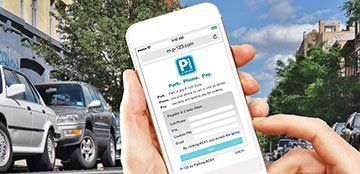
App-based systems require no hardware at all. Parkers pay by scanning a QR code or entering their license plate from any mobile browser. Parking BOXX offers the P-123 app - the most affordable entry point for facilities that want to go digital without capital investment. No app download is required.
Parking Control System Components
A complete parking control system is made up of several hardware and software components that work together. Here is what each one does.
Entry Stations and Ticket Machines
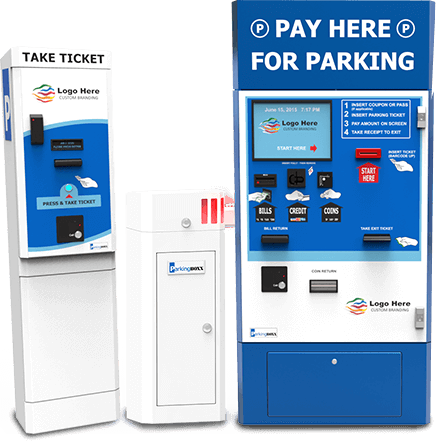
Entry stations are the first point of contact for drivers entering a parking facility. They dispense tickets, read credentials, capture license plates, or accept pre-validated QR codes. Parking BOXX parking ticket machines print barcoded tickets with customizable layouts, support integrated RFID readers and LPR cameras, and are built in powder-coated stainless steel enclosures rated for outdoor use in temperatures from -40 to 130 degrees Fahrenheit.
Entry stations can be configured in multiple modes: ticket-only, credential-only, LPR-only, or combination modes that support all entry methods simultaneously. This flexibility allows a single entry lane to serve transient visitors (ticket), monthly permit holders (RFID), and pre-registered vehicles (LPR) without separate lanes for each user type.
Exit Stations and Lane Verifiers
Exit stations verify that payment has been made before raising the exit gate. The driver inserts their validated ticket, scans a credential, or the system reads their license plate to confirm the transaction is complete.
Barrier Gates
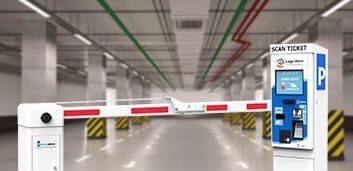
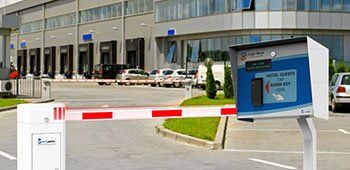
Barrier gates physically control vehicle entry and exit. Parking BOXX offers straight-arm, articulating, and long-arm barrier gate systems compatible with Magnetic and LiftMaster operators. Gate arms range from 8 to 20+ feet for wide lanes and dual-lane configurations.
Payment Machines and Pay Stations
Payment machines and pay stations collect parking fees. Pay-on-foot stations are located inside the facility so drivers pay before returning to their vehicle. Drive-up pay stations are positioned at exit lanes. All Parking BOXX pay stations accept tap, chip, Apple Pay, Google Pay, and EMV contactless payments.
License Plate Recognition (LPR) Cameras
AI-powered LPR cameras capture and read license plates in real time. They enable ticketless entry, automated access control, enforcement, and vehicle tracking. LPR works in all lighting conditions and can process vehicles at full driving speed.
Access Control Pedestals and Credential Readers
Access control pedestals read RFID cards, proximity fobs, mobile credentials, and QR codes. They are used in access-only facilities where payment is not collected at the gate - employee lots, residential garages, and tenant parking.
Parking Management Software
CloudEASE is Parking BOXX's cloud-based parking management platform. It provides remote monitoring, rate management, access control, real-time occupancy, revenue reporting, and integrations - all from a browser with no software to install.
Intercoms and Driver Assistance
Parking system intercoms provide two-way audio and video communication between drivers and facility operators. They handle lost tickets, payment issues, gate malfunctions, and accessibility requests without requiring on-site staff at every lane.
Parking Lot vs. Parking Garage Control Systems
Both parking lots and garages use the same core technology - barrier gates, pay stations, LPR cameras, and management software. The key differences are in construction and environmental requirements.
Parking lot systems are installed outdoors and must withstand rain, snow, extreme heat, direct sunlight, and wind. Equipment uses powder-coated stainless steel enclosures, weather-sealed electronics, and outdoor-rated displays. Loop detectors are cut into asphalt. Parking BOXX equipment is engineered for outdoor durability with operating temperatures from -40°F to 130°F.
Parking garage systems operate in covered or enclosed environments with less weather exposure. However, garages introduce their own challenges: ceiling height constraints for gate arms, ventilation considerations for enclosed pay stations, concrete floors requiring specialized loop detector installation, and ramp configurations for multi-level lane management.
Both environments benefit from professional parking lot layout and design to optimize traffic flow, lane placement, and equipment positioning.
Parking Control System Technology
RFID and Contactless Credentials
RFID (Radio Frequency Identification) credentials - cards, fobs, and stickers - allow hands-free access. The reader detects the credential from several feet away, verifies authorization, and opens the gate without the driver needing to stop or roll down a window. RFID is the most common technology for tenant and employee parking access control.
License Plate Recognition (LPR)
LPR cameras use AI and optical character recognition to read plates in real time. LPR enables ticketless entry in gated systems, gateless enforcement in open lots, and automated access for pre-registered vehicles. It works in daylight, low light, and nighttime conditions. Learn more about AI LPR cameras for parking.
Mobile and App-Based Access
Mobile access allows drivers to use their smartphone as a parking credential. Options include Bluetooth, NFC, QR codes, and in-app virtual credentials. Mobile access eliminates the need for physical cards and simplifies visitor and temporary access management.
QR Code and Barcode Ticketing
Barcode tickets are printed at entry and scanned at pay stations and exit lanes. QR codes can be pre-issued for reservations and event parking, allowing drivers to scan and enter without stopping at the ticket machine. Both formats work with standard thermal printers built into Parking BOXX entry stations.
Cloud-Based Parking Management
Cloud platforms like CloudEASE connect all system components over the internet for centralized management. Operators can adjust rates, monitor equipment status, view live occupancy, pull revenue reports, and manage access lists from any device. Cloud systems also enable remote diagnostics - many issues are resolved without a site visit.
How to Choose a Parking Control System
Selecting the right parking control system depends on several factors. Use this comparison to match your facility requirements to the right system type.
- Full-Featured Gated (PARCS) - Best for high-volume garages, hospitals, and airports. Revenue capture: approximately 100%. Hardware: gates, ticket machines, pay stations, LPR, software. Cost: $40,000 to $80,000+.
- Flat-Rate Gated - Best for event venues, fairgrounds, and simple lots. Revenue capture: approximately 100%. Hardware: gates, entry/exit terminals. Cost: $15,000 to $35,000.
- Access Control-Only - Best for employee lots, residential, and tenant garages. No payment collection. Hardware: pedestals, credential readers, gates optional. Cost: $5,000 to $20,000.
- LPR Ticketless - Best for modern garages and mixed-use facilities. Revenue capture: 85 to 95%. Hardware: LPR cameras, pay stations, software. Cost: $20,000 to $50,000.
- Metered - Best for on-street, municipal, and surface lots. Revenue capture: 70 to 85%. Hardware: multi-space meters. Cost: $5,000 to $15,000 per meter.
- Smartphone App (P-123) - Best for small lots, low-volume, and quick start. Revenue capture: 60 to 75%. Hardware: none, QR signage only. Cost: under $500.
Key decision factors:
- Traffic volume - High-volume facilities need gated systems for throughput and revenue capture.
- Revenue goals - If maximizing revenue collection is critical, gated PARCS delivers the highest capture rate.
- Budget - Smartphone apps and LPR offer lower entry costs. Full PARCS requires more capital but generates the highest return.
- Staffing - Cloud-managed and automated parking systems reduce or eliminate the need for on-site attendants.
- Facility layout - Surface lots, garages, and mixed-use facilities each have different equipment and configuration needs. See our parking lot layout guide.
Use the Parking BOXX ROI calculator to estimate revenue and payback period for your facility.
Parking Control System Costs
Parking control system costs depend on system type, number of lanes, payment hardware, and software licensing. Here are typical price ranges:
- Smartphone app (P-123): Under $500 - no hardware, QR signage only
- Access control-only: $5,000 to$20,000 - pedestals, readers, optional gates
- Flat-rate gated: $15,000 to$35,000 - barrier gates, entry/exit terminals
- LPR ticketless: $20,000 to$50,000 - cameras, pay stations, software
- Full-featured PARCS: $40,000 to$80,000+ - complete gated revenue control
Parking BOXX publishes pricing tiers and offers a best-price guarantee. If you have an apples-to-apples quote lower than our total system price, we will beat it by 10%. Request a quote for your specific configuration.
Industries and Facilities That Use Parking Control Systems
Parking control systems serve a wide range of facilities across North America. Each industry has unique requirements for access control, payment processing, and operational management.
- Hospitals and healthcare facilities - Patient, visitor, and staff parking with validation support
- Universities and colleges - Permit-based access, event parking, mixed revenue and access control
- Hotels and resorts - Guest validation, valet integration, revenue parking for non-guests
- Airports - High-volume, multi-rate structures, long-term and short-term separation
- Municipalities - On-street meters, public garages, enforcement integration
- Commercial office buildings - Tenant access control, visitor management, monthly permits
- Shopping centers and retail - Parking validation, free-with-purchase, time-limited parking
- Campgrounds and recreation - Seasonal access, day-use fees, remote management
See parking solutions by industry for configurations tailored to your facility type.


Parking Control Equipment
Frequently Asked Questions
What is a parking control system?
A parking control system is an integrated set of hardware and software that manages vehicle entry, exit, payment processing, and access control for parking lots and garages. Systems range from simple smartphone apps to full-featured gated configurations with barrier gates, ticket machines, pay stations, and cloud management software.
How much does a parking control system cost?
Parking control system costs range from under $500 for a smartphone-based system to $80,000 or more for a multi-lane gated revenue control system with LPR cameras. The cost depends on facility size, number of lanes, system type, payment hardware, and software licensing. Parking BOXX publishes pricing tiers and offers a best-price guarantee.
What is a parking access and revenue control system (PARCS)?
PARCS stands for Parking Access and Revenue Control System. It refers to the full suite of hardware and software used to control vehicle access and collect parking revenue - including barrier gates, ticket dispensers, pay stations, exit verifiers, LPR cameras, and management software. PARCS is the industry-standard term for a complete gated parking control configuration.
What are the main types of parking control systems?
The main types are: (1) Full-featured gated PARCS systems with barrier gates, ticket machines, and pay stations for maximum revenue control. (2) Flat-rate gated systems for simple entry/exit with a fixed fee. (3) Access control-only systems using RFID, LPR, or credentials for authorized vehicles. (4) LPR-based ticketless systems that use cameras instead of physical tickets. (5) Metered parking systems for on-street or surface lots. (6) Smartphone app-based systems requiring no hardware.
What payment methods do parking control systems accept?
Modern parking control systems accept contactless tap payments, chip cards, Apple Pay, Google Pay, credit and debit cards, QR code payments, and mobile wallet payments. Some systems also support cash, coins, and validation tickets. Parking BOXX pay stations support all major contactless and card payment methods including EMV chip and tap.
Can parking control systems work without barrier gates?
Yes. LPR-based systems use cameras to read license plates and manage access and payments without physical gates. Smartphone app systems like the Parking BOXX P-123 require no hardware at all - parkers pay by scanning a QR code. Gateless systems cost less to install and maintain but capture less revenue than gated configurations because there is no physical enforcement at entry and exit.
How do parking control systems generate revenue?
Parking control systems generate revenue by charging fees at entry, exit, or both. Gated systems achieve close to 100% revenue capture because every vehicle must pay to exit. LPR and app-based systems rely on compliance and enforcement. Revenue is collected through pay stations, pay-on-foot kiosks, mobile payments, and online pre-booking. Cloud management software like CloudEASE provides real-time reporting on revenue, occupancy, and transaction data.
What is the difference between parking lot and parking garage control systems?
Parking lot systems are installed outdoors and must be weatherized for rain, snow, heat, and direct sunlight. Equipment uses stainless steel enclosures and outdoor-rated components. Parking garage systems operate in covered environments with less weather exposure but may require additional considerations for ceiling height, ventilation, and loop detector placement in concrete. Both use the same core technology - barrier gates, pay stations, and management software - but lot equipment requires more rugged construction.
How does LPR work with parking control systems?
License Plate Recognition (LPR) cameras capture images of vehicle plates at entry and exit points. The system reads the plate number, matches it against a database of authorized vehicles or active parking sessions, and triggers gate opening or access approval. LPR can replace physical tickets entirely in gated systems (ticketless entry) or operate as the sole access method in gateless configurations. Learn more about AI LPR cameras.
What is CloudEASE parking management software?
CloudEASE is Parking BOXX's cloud-based parking management platform for remote monitoring, rate management, access control, reporting, and integrations. It is browser-based with no software to install. Operators can manage rates, view real-time occupancy, pull revenue reports, configure access lists, and monitor equipment status from any device. Learn more about CloudEASE.
Do parking control systems require internet connectivity?
Cloud-managed systems require internet connectivity for remote monitoring, real-time reporting, and software updates. However, well-designed systems continue operating offline - processing payments and controlling gates locally - and sync data when connectivity is restored. Parking BOXX systems are designed to operate independently during network outages with no interruption to parking operations.
How long does it take to install a parking control system?
Installation timelines depend on system complexity. A single pay station or smartphone app can be operational within hours. A full multi-lane gated system typically takes a few days from installation start to commissioning. Parking BOXX handles the entire process - site assessment, equipment manufacturing, installation, configuration, and staff training - and minimizes downtime with zero-lost-revenue switchover in many cases. Request a quote to get a timeline for your project.
Why Choose Parking BOXX for Parking Control Systems
Parking BOXX is a North American parking equipment manufacturer with over 85 years of combined industry experience. We design, build, install, and support every system we sell - no resellers, no middlemen, no finger-pointing between vendors.
- Manufacturer-direct - Buy directly from the company that designed and built the equipment. No reseller markup.
- Full range - From a $500 smartphone app to an $80,000+ multi-lane gated system, one company covers every configuration.
- Best price guarantee - If you have an apples-to-apples quote lower than ours, we beat it by 10%.
- CloudEASE included - Every system includes cloud-based management software for remote monitoring and reporting.
- North American installation and support - Our service network covers every US state and Canadian province.
- Built to last - Stainless steel construction, 8-10+ year service life, with parts and support available long after installation.
Learn more about Parking BOXX or request a quote - no mandatory demo required before you see pricing.