Automated Parking Systems
Parking BOXX designs and manufactures automated parking systems that let lots and garages operate 24/7 without on-site staff. Self-service payment, barrier gate access control, LPR cameras, and CloudEASE cloud management — all manufactured direct.
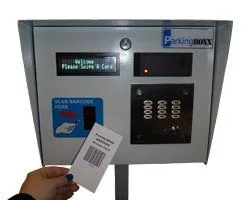
Payment, access, and management — running automatically.
An automated parking system is the equipment and software that lets a parking facility collect payment, control vehicle access, and manage operations without on-site staff. The system handles every step of the parking transaction automatically — from the moment a vehicle enters to the moment it exits.
What an automated parking system does:
- Accepts payment through self-service pay stations and kiosks (credit, cash, mobile, tap-to-pay)
- Controls access using barrier gates, LPR cameras, and credential readers at entry and exit lanes
- Tracks revenue in real time through CloudEASE cloud software, accessible from any device
- Manages operations remotely — rate changes, maintenance alerts, gate control, and reporting all happen through the cloud
An automated parking system automates parking OPERATIONS — payment, access, and management. It does not physically move or stack vehicles. Robotic parking is a completely different technology that Parking BOXX does not manufacture.
An automated parking attendant is a self-service kiosk or pay station that replaces a human booth attendant. Instead of a person collecting payment, the automated attendant handles the transaction, prints the receipt, and raises the gate — entirely on its own.
24/7 operations. Better revenue capture. Lower labor costs.
Parking automation technology keeps your facility earning around the clock — nights, weekends, and holidays included. Here are the three core benefits that drive ROI.
24/7 Unattended Operation
A parking automation system runs around the clock with zero staff. Drivers enter, park, pay, and exit on their own schedule. CloudEASE monitors every transaction and sends alerts if any equipment needs attention. One operator can oversee multiple facilities from a single dashboard without visiting any location.
This matters for facilities that currently staff attendant booths during business hours and lose revenue during off-hours. Parking automation technology keeps the facility earning 24/7 — nights, weekends, and holidays included.
Revenue Capture Improvement
Every transaction runs through the payment system and records in CloudEASE. There is no cash leakage from manual handling, no forgotten transactions, and no lost tickets resulting in free exits. Automated parking equipment captures revenue that manual operations miss.
CloudEASE provides real-time revenue reporting by facility, lane, payment type, and time period. Operators see exactly where money is earned and can use the data to model the financial impact of automation.
Labor Cost Reduction
Staffed parking operations carry significant labor costs — attendant wages, benefits, scheduling, training, and turnover. An automated parking system eliminates the need for booth attendants entirely. One operator manages multiple facilities from the CloudEASE dashboard, handling exceptions remotely instead of standing in a booth.
For facilities currently paying two or three attendants across shifts, the labor savings alone can cover the cost of the automated system within the first year.
Four equipment categories. One management platform.
A complete automated parking system from Parking BOXX includes four categories of equipment, all manufactured in-house and connected through CloudEASE. Every component is designed to work together — no patchwork integrations, no third-party black boxes.
Pay Stations and Kiosks
Self-service pay stations and parking kiosks accept credit cards, cash, mobile payments, and tap-to-pay. Pay stations integrate with gated entry and exit lanes, processing payment before the barrier gate opens. Kiosks serve as standalone payment points in open lots where drivers pay voluntarily.
Parking BOXX manufactures multiple payment form factors — pay-on-foot stations for garage lobbies, drive-up stations at exit lanes, and standalone kiosks for surface lots. The right combination depends on your facility layout and traffic volume.
Barrier Gate Automation
Automated barrier gates control vehicle entry and exit at every lane. The gate stays down until the driver takes a ticket, presents a credential, or completes payment. Loop detectors sense vehicle presence, and the gate arm raises and lowers automatically.
Gate automation is the physical enforcement layer of the system. Without gates, payment is voluntary. With gates, every vehicle must complete the entry and exit process before the barrier opens. Parking BOXX manufactures barrier gates for standard lanes and articulating gates for low-clearance garages.
LPR-Based Layered Entry System
LPR cameras serve as the primary entry layer — reading plates at entry and exit so registered users drive in and out without stopping. Monthly permit holders, pre-paid reservations, and validated guests are identified automatically; the gate opens without any driver action. For unregistered vehicles the camera cannot match, a backup ticket is dispensed so every vehicle has a path forward — no dead ends, no stuck lanes.
For transient parkers, LPR links the plate to the parking session. The driver pays at a kiosk, pay station, or mobile app, and the system matches the payment to the plate on exit. No ticket to lose for permitted parkers — and a reliable fallback for everyone else.
CloudEASE Remote Management
CloudEASE is the parking automation software that ties every component together. It provides real-time revenue dashboards and transaction logs, remote gate control from any device, rate schedule management without an on-site visit, maintenance alerts for equipment status, and multi-facility management from one login.
CloudEASE eliminates the need for on-site management. The software handles the monitoring; the operator handles the exceptions. Upgrade from a kiosk to a full gated system — CloudEASE works across all stages without starting over.
The hardware changes. The automation principle stays the same.
Automated parking systems scale to fit any facility type. Payment, access, and management run automatically through CloudEASE regardless of whether you operate a surface lot, a multi-level garage, a hotel, or a mixed-use development.
Automated Parking Lot Systems
Entry and exit gates with pay-on-foot or drive-up payment stations. The most common automated parking configuration — straightforward to install and fast to generate ROI.
Automated Parking Garage Systems
Multi-level garages add occupancy tracking, level-by-level guidance, and pay-on-foot stations near elevators and stairwells. Handles higher volumes and more complex traffic patterns than surface lots.
Hotel Parking Automation
Hotels need guest validation, valet integration, and reservation-based access. Parking BOXX provides hotel parking systems with configurations specific to hospitality operations and property management system integrations.
Hospital and Medical Parking
Healthcare facilities require patient validation, staff permit management, and ADA compliance at every equipment touchpoint. High-volume throughput with sensitive populations demands reliable, clearly-signaged automation.
Multi-Tenant Properties
Properties with multiple tenants — office, retail, residential — need revenue splitting, tenant-specific rate schedules, and separate reporting by zone. CloudEASE handles multi-tenant configurations from one dashboard.
High-Volume Facilities
Airports, stadiums, and event venues require maximum throughput during peak arrival and departure periods. LPR-based layered entry, high-speed gates, and multiple exit lanes keep vehicles moving without bottlenecks.
Pricing factors and what drives project cost.
Automated parking system cost depends on several factors. As a direct manufacturer, Parking BOXX eliminates the middleman between the factory and your facility. Every automated parking system includes hardware, CloudEASE software, and full installation support throughout North America.
Number of entry and exit lanes
The number of lanes determines how many gates and payment stations are needed. A single-entry surface lot costs significantly less than a multi-lane garage configuration.
Credit-only vs. cash acceptance
Credit-only systems cost less than configurations with cash acceptance hardware. Mobile payment and tap-to-pay options are supported on all Parking BOXX pay stations.
License plate recognition cameras
LPR cameras add to the hardware package cost but reduce operating costs by serving as the primary entry layer for registered parkers — no ticket dispensing required for monthly permit holders — and enabling automated monthly permit management.
Civil and electrical work
New concrete equipment islands, electrical runs, and network infrastructure affect the install price. Lots pre-wired for equipment cost significantly less to equip than lots without existing infrastructure.
CloudEASE included
CloudEASE is included with every Parking BOXX automated parking system. Advanced multi-site features and enterprise configurations may adjust subscription pricing.
No distributor markup
Parking BOXX sells direct from the manufacturer. No dealer markup. No middleman margin. Quote reflects actual factory pricing plus installation for your specific facility.
Frequently Asked Questions
Common questions about automated parking systems, equipment components, cost, and how CloudEASE supports unattended operations. See also the parking system FAQ for broader system questions.
Request a Free Site AssessmentWhat is an automated parking system?
How much does an automated parking system cost?
What is an automated parking attendant?
Can an automated parking system work without gates?
What equipment is included in an automated parking system?
Is automated parking the same as robotic parking?
How does CloudEASE support parking automation?
Can automated parking systems handle multiple facilities?
Ready to automate your parking operation?
Contact Parking BOXX for a free site assessment and custom system quote. As a direct manufacturer, we handle hardware, CloudEASE software, and full installation support across North America — no middleman, no markup.
- ✓ Barrier gates — entry and exit lanes
- ✓ Self-service pay stations or kiosks
- ✓ LPR cameras for layered entry
- ✓ CloudEASE cloud management software
- ✓ Full installation support across North America